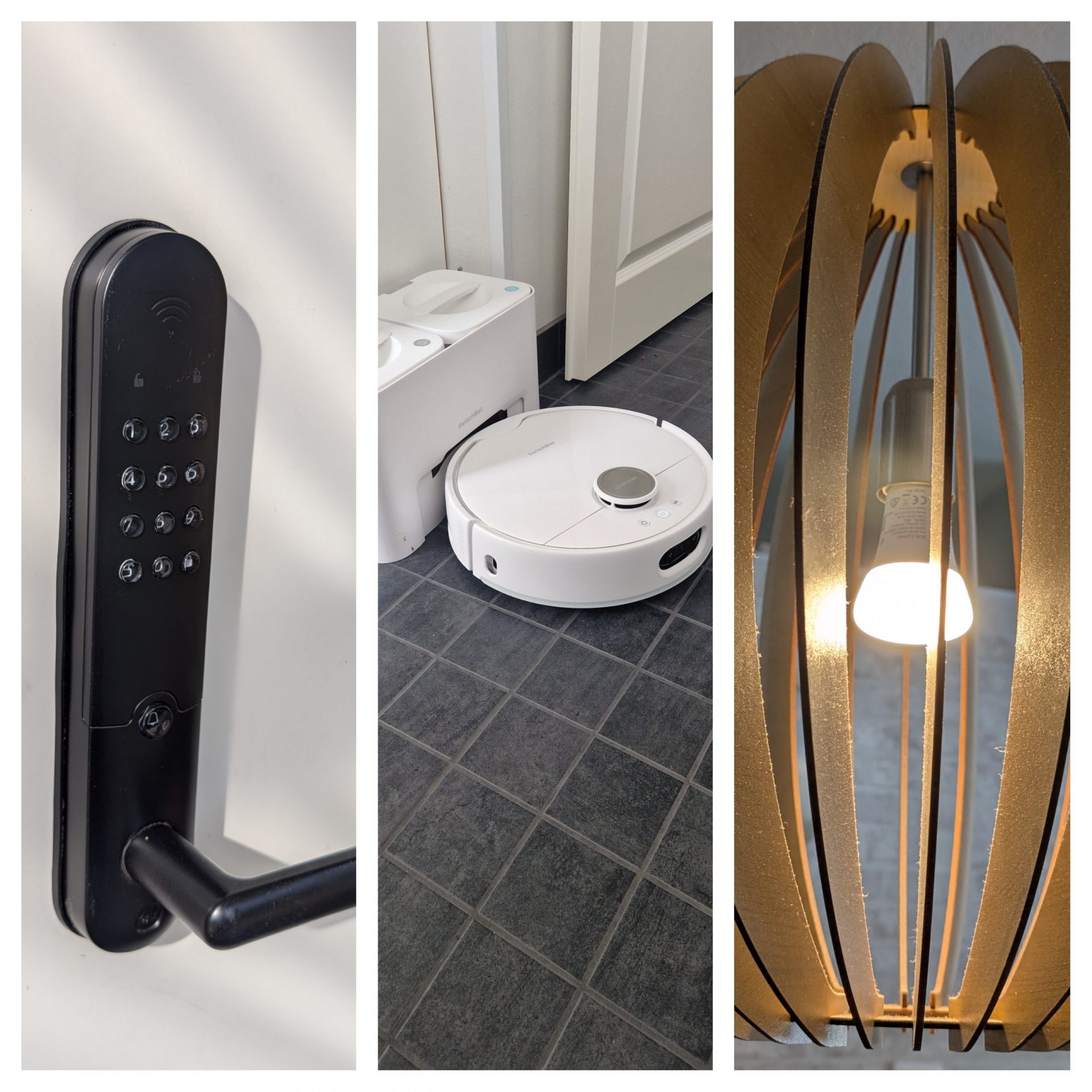
6 Smart Home Devices I Couldn’t Live Without Anymore in 2026
There’s a certain point in your smart home journey where things stop feeling like gadgets and start feeling like necessities. You forget what life was like before them — and honestly, you don’t want to remember. After years of experimenting (and plenty of impulse purchases I’d rather forget), here are the devices that have genuinely earned a permanent place in my home.
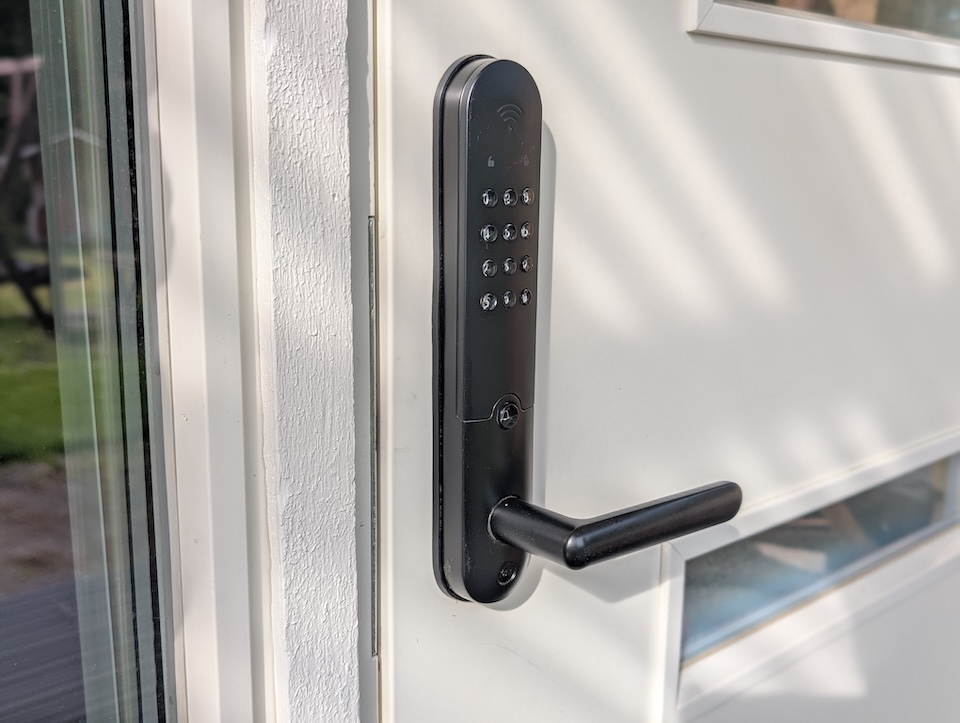
1. Smart Locks — Yale Doorman L3
Keys. When was the last time you actually needed them? For me, the answer is: I genuinely can’t remember — and that’s exactly the point.
A smart lock was one of the first real upgrades I made, and it immediately changed how I move through my day. No more patting down pockets before leaving, no more that anxious moment at the door wondering if you locked up. You just go.
I’ll be honest — the first few times I left the house without keys felt genuinely strange. Almost wrong. Your hand reaches for your pocket out of habit and finds nothing, and for a split second your brain fires a small alarm. But that feeling fades faster than you’d expect, and what replaces it is something surprisingly freeing. Within a week it just felt normal. Within a month, the idea of carrying keys everywhere felt oddly archaic.
And then there’s the peace of mind. You know that specific anxiety — you’re halfway to work, or already at the office, and the thought creeps in: did I actually lock the door? With a smart lock, you pull out your phone, check, and it’s done. Locked. No turning back, no wasted journey. But here’s the thing — after a while, I stopped even doing that. Once you’ve set up an automation that locks the door behind you every single time, you realise you don’t need to check anymore. The trust builds quietly, and one day you notice the anxiety just isn’t there. That mental offload alone is worth the price of entry for me.
If you need one final convincing argument: this is the only smart device in our home that my wife volunteered an opinion on — unprompted and enthusiastically. Out of everything I’ve installed over the years, the smart lock is her outright favourite. That’s the highest WAF (Wife Approval Factor) rating in the house, and honestly, I think that says it all.
I use the Yale Doorman L3 — a fantastic lock, though it’s only available in the Nordic region. But the concept works beautifully however you set it up. Some locks use a keypad code, others use Bluetooth to detect your phone as you approach and unlock the moment you turn the handle. Either way, walking through your own front door has never felt this effortless.
Recommended options:
2. Robot Vacuum + Mop — SwitchBot S10
If there’s one device on this list that has genuinely given me back time in my week, it’s this one.
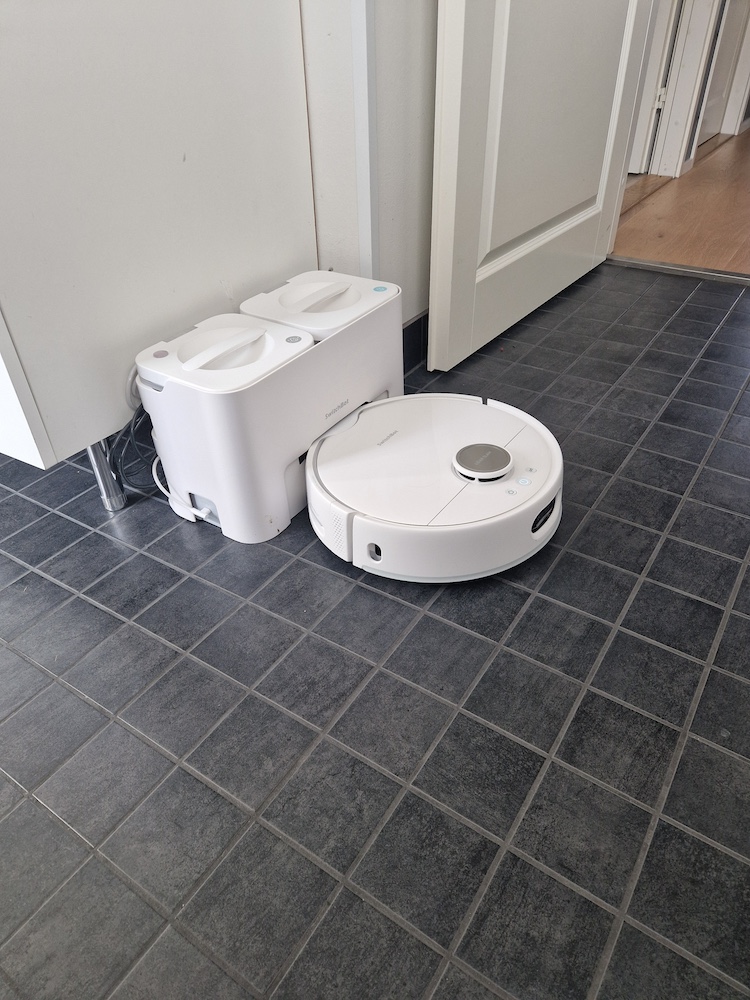
I was already a convert to robot vacuums — but when I upgraded to a combo unit with mopping, I was skeptical. How good could it really be? The answer: better than I ever expected. The floors stay cleaner, more consistently, with almost zero effort on my part. It runs while I’m out, and I come home to a clean house like some kind of witchcraft.
The one thing to stay on top of: the waste water. Remember to empty and clean that every few runs and the machine will reward you handsomely.
I’m currently running the SwitchBot S10, which was genuinely ahead of its time when it launched, but now started to feel a bit outdated. There are now some excellent alternatives worth considering too, so check the list down below.
Recommended options:
- SwitchBot S20 [Amazon.de] [Amazon.com]
- Roborock Saros 20 [Amazon.de]
- Roborock Qrevo S5V [Amazon.de]
- Dreame X60 Pro Ultra Complete [Amazon.de] [Amazon.com]
- Dreame X50 Ultra Complete [Amazon.de] [Amazon.com]
3. Automatic Blind & Curtain Control — SwitchBot Blind Tilt
This one might seem like a luxury, but once you’ve used it — especially wired into automations — it starts to feel essential.
I’ve had SwitchBot Blind Tilt controllers running for a few years now and they’re still going strong, which says a lot. On their own they’re convenient, but the real magic comes when you connect them to the rest of your smart home. The examples that stick with me are the small, practical ones: every evening when motion is detected in the bedroom, the blinds close automatically — so when I walk in after a shower to grab my clothes, there’s no fumbling for the cord, no moment of wondering if the neighbours can see in. It just happens. Another favourite is having them close at a set time each evening regardless, so the bedroom is always ready and private by the time I wind down for the night.
Not running tilt blinds? No problem. If you have regular side curtains, SwitchBot also makes a curtain motor that clips onto your existing rail and does the same job beautifully. I don’t have side curtains myself, but a friend has been running them for a while now and the verdict is clear: they’re great. The same kind of automations apply — imagine your curtains gliding open in the morning automatically as the sun rises, or right before your alarm goes off to wake you gently with natural light. That’s not a luxury, that’s just a better morning.
Automations like these are where smart home devices stop being individual gadgets and start becoming a system that works for you.
Recommended options:
- SwitchBot Blind Tilt Controller [Amazon.de] [Amazon.com]
- SwitchBot Curtain 3 [Amazon.de] [Amazon.com]
4. Smart Lights — Philips Hue
Okay, smart lights might not be the most exciting thing on this list. But hear me out.
Lights that turn on when you walk into a room. Lights that switch off automatically when everyone has left the house. Yard lights that come on as you pull into the driveway at night. There are so many small, practical moments in a day where having lights that just know what to do makes life genuinely easier — and over time, those moments add up.
I’ve tried a lot of different smart bulb brands over the years — more than I’d like to admit — and nothing has consistently beaten Philips Hue. Yes, they’re expensive compared to the alternatives flooding the market. But the RGB colours are genuinely vivid, the brightness is superior, and the ecosystem just works. The one exception worth mentioning: the first generation Hue RGB bulbs don’t quite hold up to the same standard, so if you’re buying, go current generation.
One buying tip worth passing on: always go for White Ambiance or RGB bulbs over the basic white ones. The ability to adjust the colour temperature — shifting from a cool, energising daylight tone in the morning to a warm, winding-down glow in the evening — is one of those features that sounds like a nice-to-have until you’ve lived with it. Then it just becomes the way lights should work.
The days of walking into a dark room and reaching for a switch feel like a distant memory — and that’s exactly how it should be.
Recommended options:
- Philips Hue White and Colour Ambiance Light Bulbs E27 1100lm [Amazon.de] [Amazon.com]
- Philips Hue Smart LED A60 Bulb, White Ambiance 1100lm [Amazon.de] [Amazon.com]

5. Motion Sensors — Philips Hue Motion
Remember how I mentioned the lights turning on automatically when you walk into a room? This is the device that makes that happen — and it’s been one of the best value-for-money additions to my setup.
Motion sensor automations are hardly new. They’ve been around forever in office buildings and hotel corridors. But there’s a reason they never go out of style: they work, and they work every single time. Walk in, lights on. Room empty, lights off. You stop thinking about light switches entirely, which sounds trivial until you’ve lived with it for a few months.
I’ve settled on Philips Hue Motion sensors as my go-to, and I’ve stuck with them for good reason — they’re simply the most reliable I’ve tested. Hue covers both indoor and outdoor use cases, which keeps things consistent across the whole house. I’ve dabbled with other brands along the way and come back every time. Reliability isn’t glamorous, but it’s what you actually want from something that’s supposed to run silently in the background 24/7.
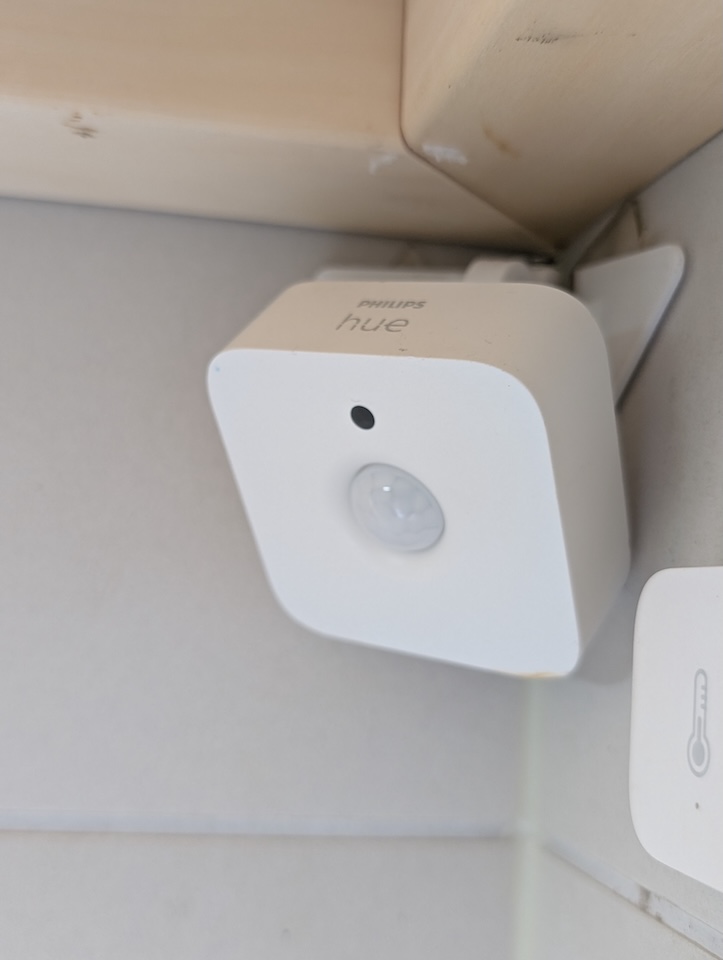
One thing worth knowing: standard motion sensors are great at detecting movement, but they’ll give up on you the moment you sit still on the sofa. If you need a sensor that understands that a motionless human is still a human — for a living room automation, for example — look into presence sensors. They use different technology (often millimeter-wave radar) to detect occupancy rather than movement. Not always the right tool, but absolutely worth knowing about.
And as a bonus: pair these with a solid smart home controller and you’ve got the foundation of a simple but effective home security layer too.
Recommended options:
- Philips Hue Indoor Motion Sensor [Amazon.de] [Amazon.com]
- Philips Hue Outdoor Motion Sensor [Amazon.de] [Amazon.com]
- Shelly Presence Gen 4 (mmWave presence sensor) [Amazon.de]
- Aqara FP2 (mmWave presence sensor) [Amazon.de]
6. Smart Relays — Shelly EM3
This one is for those of you who want to go a little deeper — and the payoff can be genuinely remarkable.
Smart relays let you bring “dumb” appliances and infrastructure into your smart home ecosystem. Lights, heating elements, pumps, water heaters — things that were never designed to be smart can suddenly be scheduled, automated, and monitored. The possibilities are wide, but I want to tell you about my favourite use case, because it’s the one that actually saves me real money.
My Shelly EM3 controls my water heater. Hooked up to Home Assistant and a Nord Pool electricity price integration, it automatically schedules the water heating to run during the cheapest hours of the day. When my solar panels are producing excess energy, it can use that instead — meaning the hot water effectively costs nothing. It’s one of those automations that runs completely in the background and just quietly pays for itself over time.
The EM3 also includes built-in clamp energy meters, so I can see exactly how much power the water heater is pulling at any given moment. Useful for monitoring, and satisfying in a nerdy way. One note though, the 3EM is quite old already so consider Shelly Pro 3EM V2 instead.
One important practical note: the water heater in my setup is controlled through a contactor — essentially a heavy-duty switch designed for high-current loads. This is intentional. Smart relays like the Shelly generally shouldn’t be wired directly to large, sustained loads. If you’re planning something similar, do your homework on the electrical side, or get a qualified electrician involved. Done right though, it’s one of the most powerful and cost-effective things you can add to a smart home.
Recommended options:
- Shelly Pro 3EM V2 (replacement for original EM3) [Amazon.de] [Amazon.com]
- Shelly 1 Gen 4 [Amazon.de] [Amazon.com]
- Shelly Pro 2 PM [Amazon.de] [Amazon.com]
Bringing It All Together — A Word on Smart Home Hubs
The devices above are brilliant on their own (well – maybe the motion sensors are not alone very useful) — but most of them truly shine when they can talk to each other. A smart lock and a motion sensor are great individually; combined, they can do things neither could alone. It’s worth knowing that while most manufacturers offer their own hub or app, these tend to work only within their own ecosystem. Your Philips Hue app won’t know what your SwitchBot is doing, and vice versa.
That’s where a platform like Home Assistant changes everything. It’s the glue that connects devices across brands, enabling the kind of cross-device automations I’ve been describing throughout this article. I won’t go deep on it here — it deserves its own dedicated post — but if anything in this article has sparked your curiosity, I’d strongly encourage you to explore it. Home Assistant is the most widely used open source smart home platform out there, and it integrates with the vast majority of major and minor devices on the market. Head over to home-assistant.io to see what it’s all about.

Hi, thanks for ideas for purchase.
How well your SwitchBot S10 works with home assistant and what functionalities are available through SwitchBot integrations?
I am thinking about the SwitchBot S20 model.
Have you tried if it could work in isolated Wifi network which does not have internet connectivity and only local DHCP, DNS and NTP services?
Have you tested if SwitchBot S10 works locally using Home Assistant when internet is switched off?
I have not tested the S10 without internet, but I assume it would not function 100% correct on such case.
S10 can be integrated to Home Assistant locally through matter over wifi, but only basic functionality is then available – such as clean, stop and return to dock. No room based cleaning for example.
To get room cleaning and similar advanced features to Home Assistant, there’s a rather new custom integration available at https://github.com/jaco/switchbot-vacuum
I’ve been using that one lately, but it fully relies on cloud API. So far worked quite well.
If fully local access and non-internet dependencies is a must, I would go with some other brand.